
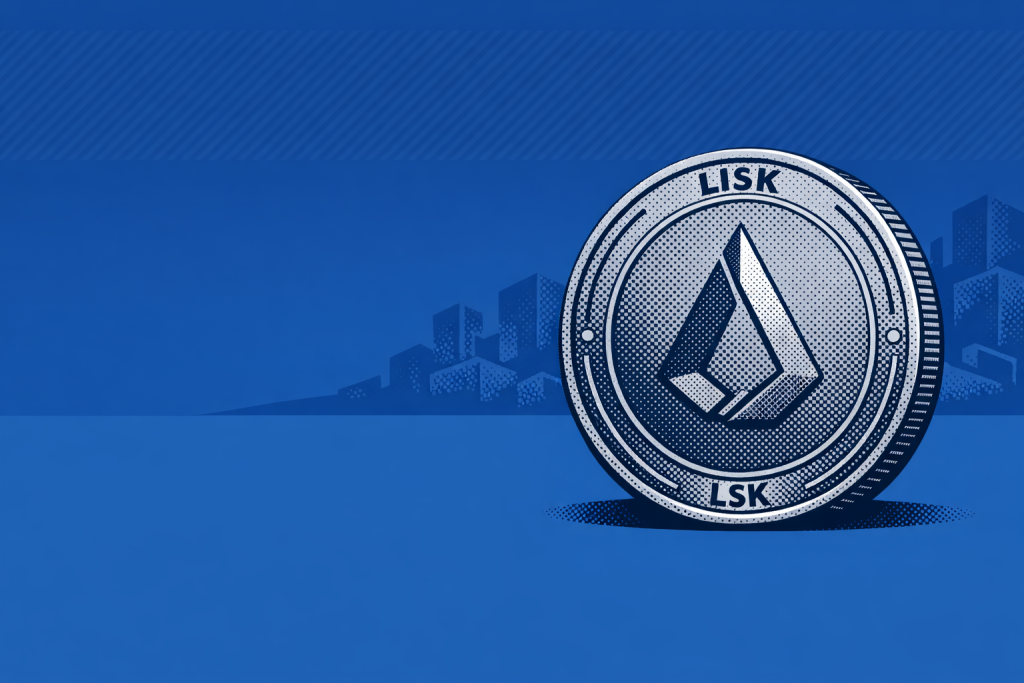
Lisk’s decision to shut down its blockchain network on October 31 is creating a new gap in Africa’s Web3 funding ecosystem, ending one of the relatively few programmes that actively backed early stage blockchain founders across the continent.
The Swiss based Web3 infrastructure company announced in August that it would wind down its blockchain and move its remaining products and developers to Celo, while shifting its own focus towards a financial operations platform for businesses.
The move closes a chapter that began in 2016, when Lisk launched as an independent blockchain network, and comes as funding for African blockchain startups is already becoming more selective.
According to Crypto Valley VC, African blockchain companies raised $90.1 million across 28 deals in 2025, down 26.6% from the previous year. The number of deals fell from 30 to 28, suggesting that the decline was driven largely by a reduction in capital rather than a sharp collapse in deal activity.
Lisk was more than a blockchain
Lisk’s African strategy was built around getting developers to build on its network, supporting those developers financially and creating an ecosystem of applications that could eventually attract users and transaction activity.
The company stepped up its African expansion in 2024, organising developer roadshows in Cape Town, Nairobi and Lagos while building local communities in Nigeria, Ghana and Kenya.
It also partnered with organisations including Web3Bridge, AyaHQ, CV Labs and CV VC to create routes for developers and startups to access training, funding and investor networks.
By the end of 2024, Lisk said its blockchain had approximately 95,474 accounts and had processed more than 22 million transactions.
But building developer activity was only one part of the challenge.
Founders could deploy products on Lisk, but convincing users to move from established blockchain networks required them to change how they moved assets, acquired tokens for transaction fees and managed liquidity.
Africa’s crypto market was already concentrated around networks with established liquidity and user bases.
Artemis identified TRON and Ethereum as major networks for sending and receiving crypto assets across the African markets covered in its 2025 research. Ethereum was the most used network in Nigeria, Kenya and South Africa, while TRON led in six of the ten countries in its sample.
That made network switching a significant hurdle for newer blockchain ecosystems attempting to build traction.
Funding was part of Lisk’s Africa strategy
Lisk’s most visible contribution to the African ecosystem was its willingness to put capital behind early stage founders.
In March 2024, Lisk and CV Labs launched a six month Blockchain Incubation Hub for African startups building on Lisk.
The programme provided $4,000 for completing the first block, up to $16,000 for the second and up to $100,000 in additional funding.
According to Olaf Hannemann, co founder and head of growth at CV VC, CV Labs admitted 43 startups across two cohorts, with 11 completing the full programme.
Lisk supplied the funding, while CV Labs provided mentorship, infrastructure and operational support.
AyaHQ became another channel for Lisk funding. According to its co founder and CEO Eric Annan, the organisation supported more than 35 startups across 25 countries across four cohorts, with 25 ultimately receiving Lisk funding.
The support included equity free grants of up to $20,000 and, in some cases, follow on commitments of up to $150,000.
In Nigeria, Lisk also backed Web3Bridge with $80,000 to establish Web3Bridge Garage, according to its founder Ayodeji Awosika. The initiative focused on developer training and supporting founders building on Lisk.
What Africa loses with the shutdown
The immediate effect of Lisk’s exit is not simply the disappearance of another blockchain network.
It also removes a source of early stage capital, mentorship, developer support and investor connections for founders building in the African Web3 ecosystem.
Some founders who received Lisk grants reportedly converted their LSK allocations into dollar backed stablecoins to fund their businesses, while others valued the introductions to investors, technology partners and fellow founders that came with the programmes.
That distinction matters in a funding environment where capital has become harder to secure.
The challenge for African Web3 startups is therefore likely to extend beyond finding another blockchain to build on. Founders also need replacement channels for the funding, technical support and ecosystem relationships that blockchain networks have historically provided.
Lisk is changing direction
Lisk’s own restructuring began before the blockchain shutdown was announced.
Co founder and CEO Max Kordek returned to the business in December 2025 alongside former CTO Oliver Beddows, who became chief strategy officer.
The Onchain Foundation, Lisk’s parent entity formerly known as the Lisk Foundation, subsequently discontinued several initiatives, including its Onchain research arm and Pass App wallet, as resources were redirected towards Lisk’s new direction.
By May, the restructuring had also resulted in redundancies affecting regional leads and business development teams.
Lisk is now building a financial operations platform focused on accounts, payments and approvals across fiat and stablecoin rails.
For the African Web3 ecosystem, however, the transition represents more than a corporate pivot.
It marks the end of a decade long blockchain experiment and the withdrawal of a funding and ecosystem development player at a time when African Web3 capital is already under pressure.
Techmoni Africa tracks the Fintech, Web3, and Forex stories defining Nigeria, Kenya, and Ghana. Have a story that deserves attention? Reach our editorial team at info@techmoniafrica.com