


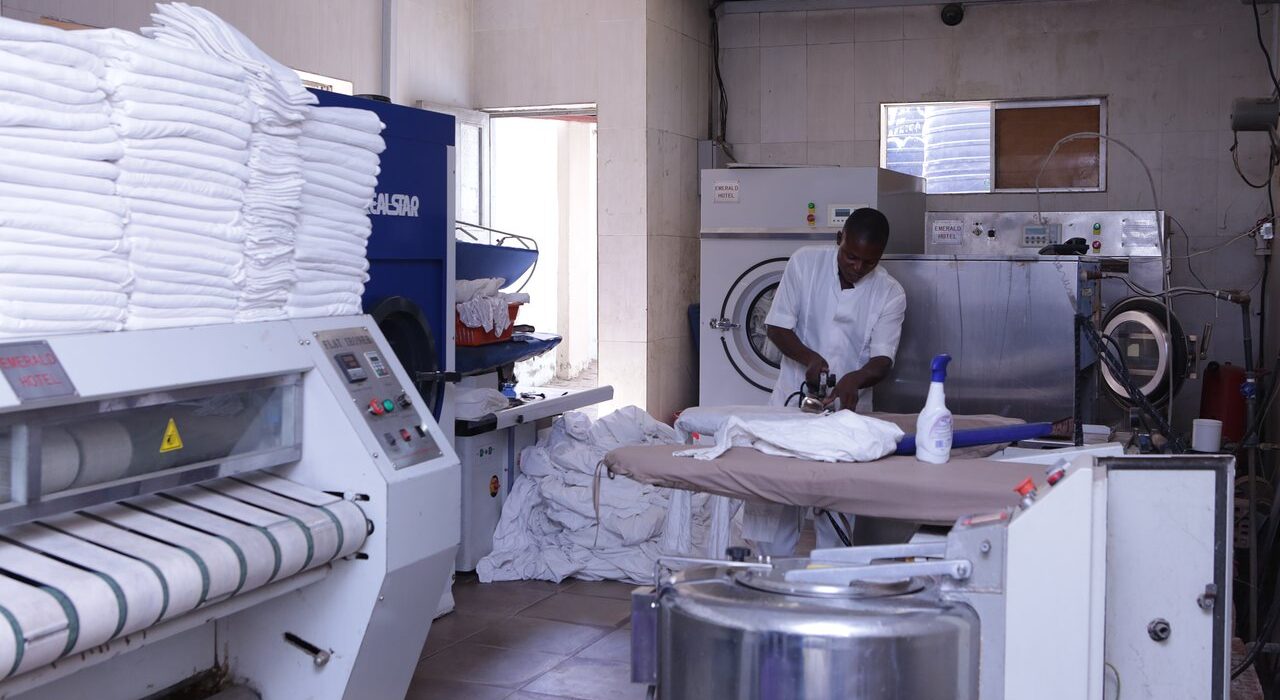
Laundry may look like a small problem. But Nigerian startup Washr is betting it’s a massive coordination failure hiding in plain sight.
Currently operating in select areas of Lagos, Washr is building a marketplace layer that connects consumers with properly vetted laundromats and dry cleaners — removing what founder Olusesan Josephs describes as the real friction: time, follow-ups, uncertainty, and mental load.
Rather than competing as another laundromat, Washr positions itself as infrastructure sitting above fragmented vendors.
The Real Problem Isn’t Washing Clothes
“The problem isn’t washing clothes. It’s everything around it. Finding a reliable vendor. Scheduling pickups. Following up. Worrying about delays, shrinkage, stains, or damage. Laundry quietly fragments people’s days and adds recurring mental load,” Josephs told Disrupt Africa.
That fragmentation is what Washr aims to eliminate.
Instead of users negotiating directly with vendors, Washr absorbs:
• Vendor selection
• Logistics coordination
• Communication
• Payment processing
• Pickup scheduling
“For the user, laundry becomes predictable and invisible. They don’t chase anyone, inspect clothes, or plan their week around pickups. They simply open their wardrobe and wear with confidence,” Josephs said.
A Marketplace, Not a Laundromat
Washr is not asset-heavy. It does not own machines or operate cleaning facilities.
“Washr is not a traditional laundromat. We are a marketplace layer that sits above existing vendors. Our value is coordination, predictability, and time savings,” Josephs said.
For vendors, the model shifts the burden of customer acquisition and marketing.
“They focus on cleaning. We bring demand and handle coordination,” Josephs said.
This positions Washr closer to a logistics-enabled services marketplace than a cleaning business — a model increasingly common across Africa’s informal sectors.
Built From Inside the Industry
Josephs brings operational experience from both sides of the ecosystem.
“I’ve spent over four years working across both sides of the market. I started and managed a laundromat as a student and later consulted for multiple dry-cleaning operations. I’ve seen how speed, volume pressure, and poor coordination create damage customers only notice when it’s permanent,” said Josephs.
That operational exposure shaped Washr’s emphasis on vendor vetting and performance consistency.
MVP First, Revenue Later
Washr recently shipped its MVP and is currently testing real user demand before scaling.
The startup is:
• Bootstrapped
• Pre-revenue
• Focused on operational validation
• Testing organic demand before paid marketing
“Shipping the MVP and onboarding initial vendors is our most significant milestone so far,” said Josephs.
Uptake has been deliberately slow.
“We’re testing organic demand and messaging before running paid ads. The users we’ve reached privately have responded positively, especially to the promise of predictability and time savings,” Josephs said.


The Bigger Challenge: Behaviour Change
Nigeria’s laundry market remains informal and trust-based. Customers typically deal directly with known vendors — even when service quality is inconsistent.
“We’re solving a real problem, but it’s one people are used to tolerating. Laundry feels ‘small’ until you calculate the hours lost to delays, follow-ups, and rework. Communicating that hidden cost without paid marketing has been the hardest part,” said Josephs.
“Another challenge is changing trust behaviour. People are used to dealing directly with vendors, even when it costs them time and peace of mind. Washr asks them to outsource that coordination layer, which takes education and repetition.”
In essence, Washr isn’t just building a product — it’s trying to redefine how Nigerians think about everyday service coordination.
Why This Matters for Nigeria’s Service Economy
Nigeria’s urban service economy remains deeply fragmented. From laundry to cleaning to home repairs, coordination inefficiency is often the real bottleneck.
If Washr succeeds, it could signal a broader opportunity:
• Marketplaces sitting above informal vendors
• Trust-layer infrastructure in everyday services
• Time-saving as a monetisable asset
• Aggregated demand unlocking vendor stability
Currently operating in select parts of Lagos, Washr plans to expand once it validates demand, operational consistency, and vendor performance.
The company earns through commissions on completed marketplace orders — though monetisation will follow after validation.
The Strategic Bet
Washr’s thesis is simple:
People don’t hate laundry.
They hate the friction around it.
If it can standardise trust and coordination in a fragmented market, the startup may carve out space in Nigeria’s growing on-demand services economy.
Source: This report is based on original reporting by Disrupt Africa.