

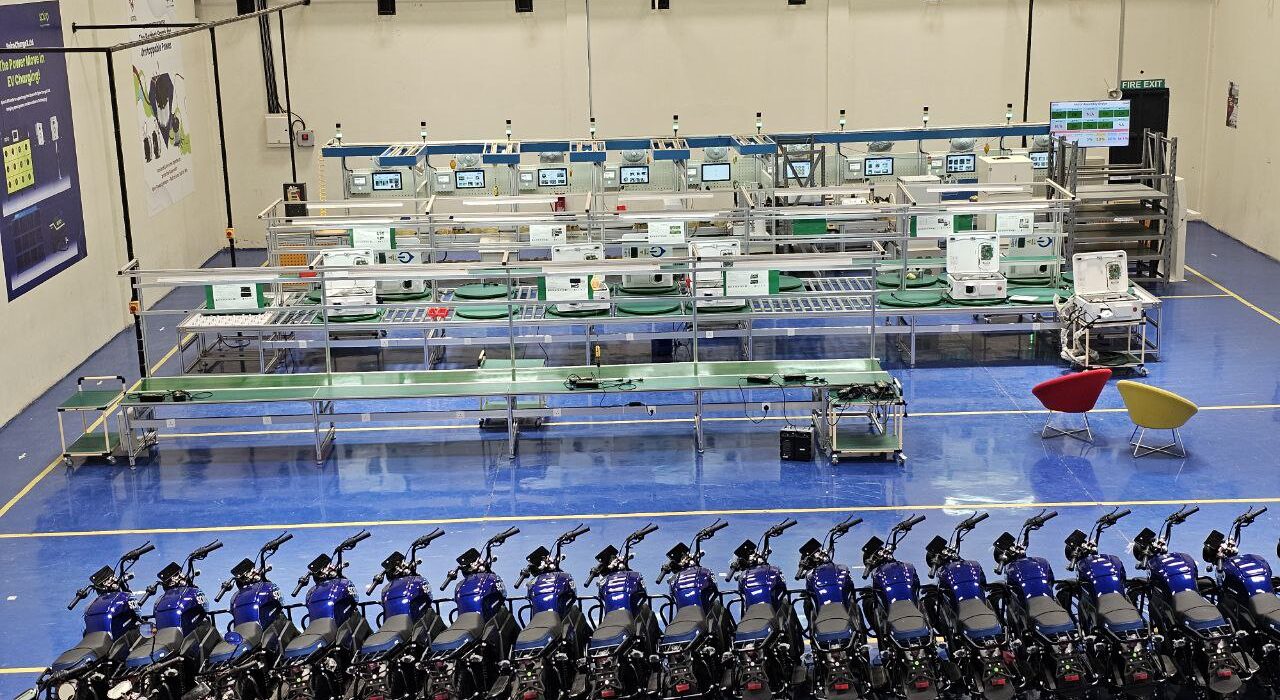
Spiro has secured $50M in debt financing to accelerate its battery-swapping expansion across the continent, reinforcing its ambition to dominate Africa’s fast-growing electric two-wheeler market. The raise, backed by Afreximbank, Nithio, and the Africa Go Green Fund, follows a $100 million injection in October 2025 — signaling that infrastructure scale, not experimentation, now defines the sector.
Why This Raise Matters
Electric mobility in Africa is entering a capital-heavy phase. The companies that win will be those that:
- Build the densest swap networks
- Secure long-term financing
- Control battery supply chains
- Lock in daily commercial riders
Spiro is positioning itself aggressively on all four fronts.
“Demand for Spiro’s innovative, industry-leading battery swapping infrastructure continues to grow and is reshaping mobility in Africa by providing reliable, clean transportation options across the continent,” said Kaushik Burman, CEO of Spiro.
The Numbers Behind the Expansion
Founded in 2022, Spiro operates in:
- Kenya
- Uganda
- Rwanda
- Nigeria
- Benin
- Togo
The company says it has:
- Deployed over 80,000 electric motorcycles
- Built more than 2,500 battery-swapping stations
- Completed 30 million battery swaps
- Captured over 50% of the electric motorcycle market (as of October 2025 raise data)
That scale gives Spiro one of the largest installed EV bases in Africa.
The Infrastructure Model
Spiro’s model is simple but capital-intensive:
- Riders buy or lease electric bikes
- Batteries are swapped in under five minutes
- Spiro owns and manages the batteries
- Revenue is generated per swap
By owning the battery assets, Spiro turns energy consumption into recurring income — not just a one-time vehicle sale.
Why Debt Instead of Equity?
The $50 million comes as debt financing, not equity.
That suggests:
- Lenders are confident in predictable swap revenues
- Spiro is preserving ownership after last year’s $100M raise
- The business is maturing into an infrastructure-backed cash flow model
In capital-heavy sectors like mobility, structured debt can fuel expansion without excessive dilution.
Kenya: The Density Test Case
Kenya remains the proving ground.
- Over 1.9 million registered motorcycles
- Most operate as boda bodas (motorcycle taxis)
- Daily usage creates consistent demand for swaps
However, grid reliability challenges — as noted by Kenya’s Energy and Petroleum Regulatory Authority (EPRA) — affect charging cycles and station efficiency.
Battery swapping only works with:
- High station density
- Reliable charging
- Fast turnaround
- Corridor concentration
Outside urban cores, thinner density can pressure margins.
The Bigger Bet
Electric motorcycles cut daily fuel costs compared with petrol alternatives. But operators still face:
- Battery depreciation
- Imported component costs
- Currency volatility
Spiro’s new financing may serve two purposes:
- Expand network density
- Strengthen working capital for battery inventory
In Africa’s EV market, infrastructure ownership increasingly equals market control.