


At a moment when fewer than 6% of fintech CEOs globally are women and funding to female-led African startups remains below 10%, CapitalSage Technology’s new internal mentorship programme is either a bold statement of intent — or proof that the pipeline problem starts much earlier than anyone admits.
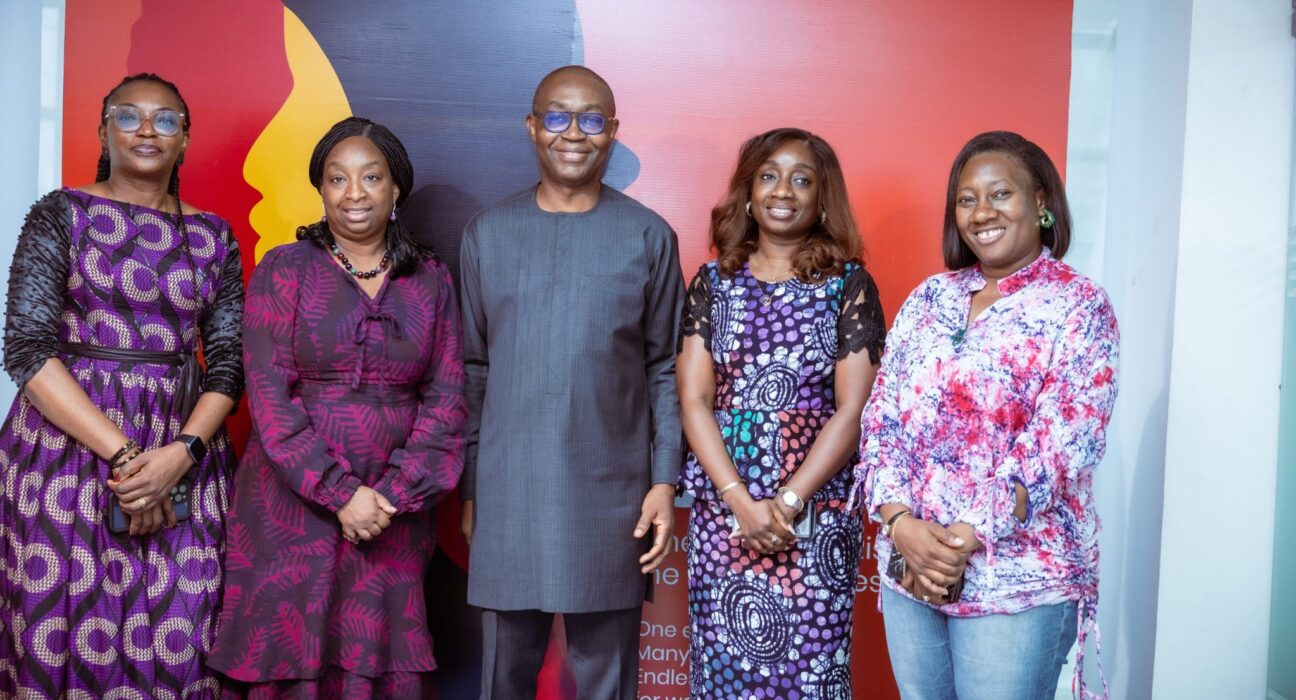
When CapitalSage Technology gathered its employees and senior executives to mark International Women’s Day, it did not stop at speeches and applause. The integrated digital financial services group — focused on driving inclusive financial growth across Africa — used the occasion to announce something concrete: a structured internal mentorship programme pairing younger female employees with experienced professionals across the organisation. It was a quiet but pointed acknowledgement that in Africa’s fast-growing fintech sector, fewer than 6% of fintech CEOs globally are women, and that fixing that number requires intervening long before the C-suite.
The announcement came from Mr Nath Ude, Group Chief Executive Officer of CapitalSage Technology, who was direct about the ambition behind the initiative.
“We want our women to become trailblazers not simply because they are women, but because they are high performers who are ready to lead and make a meaningful impact,” he said.
For a sector that is rapidly reshaping Africa’s financial services landscape, the stakes behind that statement are higher than they might appear.
Why this moment matters: the numbers behind the gap
Nigeria is, by most measures, Africa’s fintech capital — attracting 47% of all fintech deals on the continent in 2024 and accounting for 72% of the country’s total equity funding. Yet the women working within this booming sector remain dramatically underrepresented at the top. Globally, just 12% of VC-backed fintechs have women founders or co-founders, and under 6% of all fintech CEOs are women. In funding terms, less than 5% of the $12.6 billion invested in African tech startups between 2013 and 2021 went to all-female founding teams, compared with 82% to all-male teams.
Nigeria’s banking sector has made measurable progress through regulatory intervention — the Central Bank of Nigeria’s National Gender Policy, which mandates 40% female representation in management and 30% on boards, has helped push the share of women-led banks to 42%. But the broader fintech ecosystem, which operates with far less regulatory oversight on gender, has not kept pace. The gap is not a talent problem. Research consistently shows it is a structural one — rooted in access to mentorship, sponsorship, and the kind of deliberate internal investment that CapitalSage is now making.
A 2025 Reykjavík Index for Leadership survey found that 89% of Nigerians say they are comfortable with a woman as CEO of a major company — yet the same report noted that only 55% believe workplace equality has actually been achieved, down from 62% the year before. The gap between social perception and institutional reality is precisely the space that programmes like CapitalSage’s are designed to close.
What happened at the event

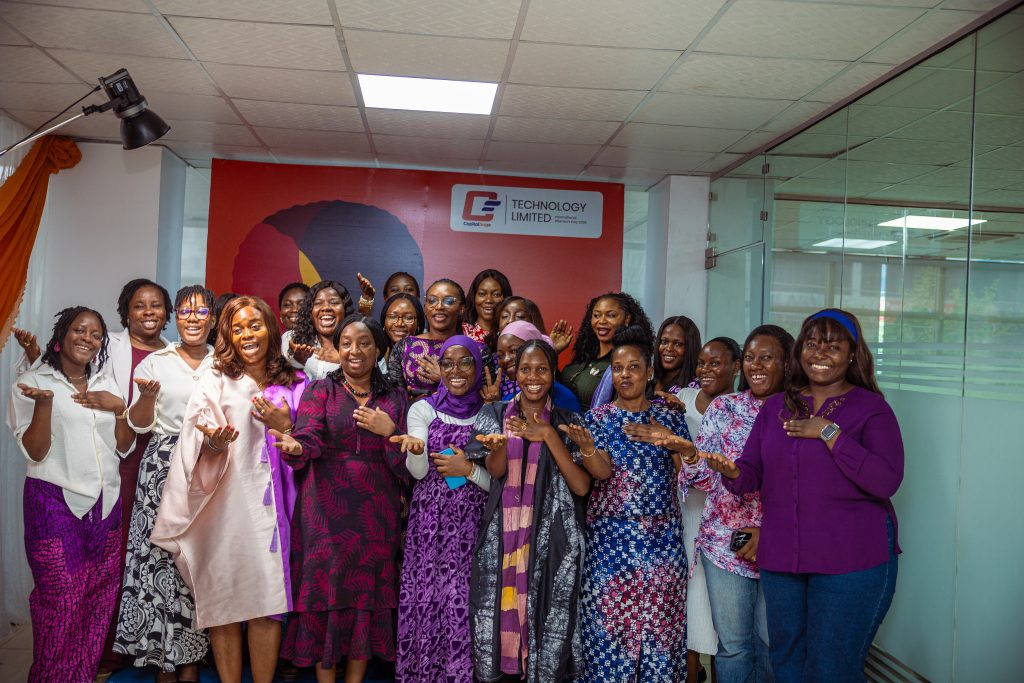
The International Women’s Day gathering brought together employees and senior executives for a reflective session centred on confidence, performance, and intentional career development. The occasion featured a panel discussion moderated by Olabisi Ogebe, Head of Business at Tiki, a subsidiary of CapitalSage Technology.
The panel brought together three leaders who drew directly from their own career journeys:
- Yvonne Akintomide, Managing Director, Regius Asset Management
- Simisola Ojumu, Managing Director, Regius Capital
- Dr Moyosore Odeniyi, Group Head, Audit, CapitalSage Holdings
Their message to the room was consistent and practical: stretch beyond your comfort zone, raise your own standards, and actively seek professionals who can offer perspective, encourage introspection, and support intentional decision-making.
In her opening address, Dr Yemisi Shittu, Group Executive Director at CapitalSage Holdings, set the intellectual frame for the discussion. She highlighted the importance of nurturing women who are technically competent, emotionally intelligent and self-aware — arguing that emotional maturity, resilience, and the ability to build meaningful relationships are not soft extras, but the critical infrastructure that enables women to navigate complex workplace dynamics and grow into impactful leaders.
The mentorship programme: what we know
The centrepiece announcement of the event was the launch of a structured internal mentorship programme. Here is what CapitalSage has confirmed:
- Younger female employees will be paired with experienced professionals from across the organisation — not just within their own departments.
- The programme is designed to provide guidance on structured career growth, with more experienced female professionals taking a formal role in supporting the next generation.
- The expected outcomes include enhanced professional exposure, stronger confidence, and better tools for navigating career decisions.
- The initiative is framed explicitly around performance and high potential, not quotas — positioning mentees as future leaders because of what they can deliver, not simply because of their gender.
The details of cohort size, duration, and formal evaluation criteria have not yet been made public. Techmoni Africa will follow up as more information becomes available.
Why structured mentorship matters more than motivation
Inspirational events are common. Structured programmes with accountability are rarer — and the data shows the difference matters. Research across Africa’s tech sector consistently identifies mentorship, not funding alone, as the primary driver of women’s advancement into leadership. Organisations like She Code Africa and the African Tech Vision Mentorship Programme have demonstrated that access to a more experienced professional — someone who can open doors, provide honest feedback, and model what the path forward looks like — is often the single most effective intervention.
What makes CapitalSage’s approach notable is that it is internal and employer-led, rather than relying on external programmes. That means mentors have direct visibility into the organisation’s promotion and project allocation processes — which is where the real career-shaping decisions get made. As Africa’s fintech sector faces growing pressure — from fraud, from regulatory complexity, and from the need to scale while maintaining trust — the organisations that build deep, diverse leadership pipelines now will have a structural advantage over those that don’t.
The broader picture: inclusive finance starts with inclusive leadership
CapitalSage Technology describes itself as focused on driving inclusive financial growth across Africa. That framing is worth examining closely. Research published in 2025 found that women-led fintech businesses in sub-Saharan Africa are significantly more likely to design products and services that reach underserved populations — particularly women in informal sectors who rely on mobile money platforms for transactions outside the traditional banking system.
In other words, the pipeline problem is not just an internal HR issue. Who leads these companies shapes what these companies build, and who those products ultimately serve. The Alliance for Financial Inclusion has argued that financial systems reflect the priorities of those who design them — and that women’s financial inclusion will only scale meaningfully when women are at the table making those design decisions.
CapitalSage’s mentorship programme, modest as it may appear in scope, is a step toward closing that loop from the inside.