
If you are a Nigerian who pays for subscriptions, earns money from foreign clients, or simply wants to hold dollars, you have likely weighed a virtual dollar card against a domiciliary account. A virtual dollar card is the better choice if you mainly pay for things online, while a domiciliary account is better for receiving, saving, and moving larger amounts of dollars. With many banks placing tight limits on international spending with naira cards, choosing the right dollar option now affects how smoothly you pay for everything from Netflix to school fees.
Differences between a virtual dollar card and a domiciliary account
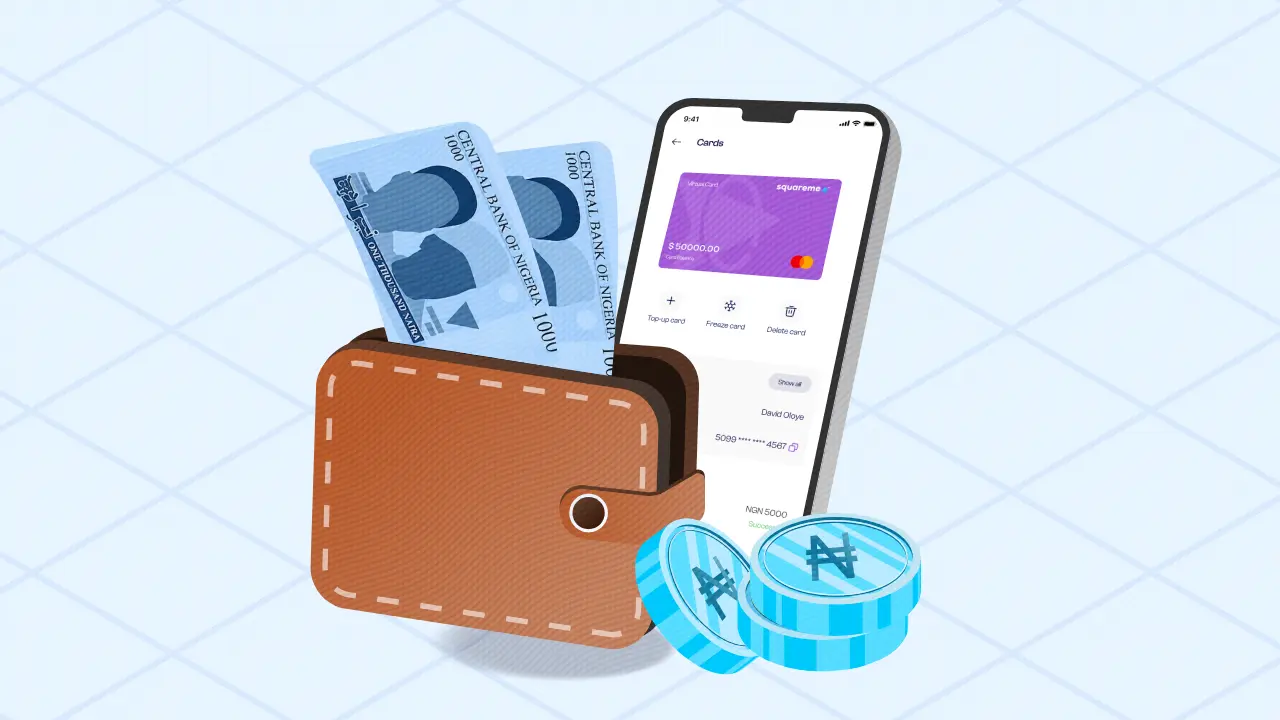
Both options give you access to dollars, but they are built for very different jobs. A virtual dollar card in Nigeria is a digital Visa or Mastercard issued by a fintech app, while a domiciliary account is a foreign currency account held by a licensed Nigerian bank.
Here is where the two differ:
- Purpose: A virtual card is made for online payments. A domiciliary account is made for receiving, saving, and transferring foreign currency.
- Currencies: Virtual cards run in US dollars. Most banks offer domiciliary accounts in US dollars, British pounds, and euros.
- Funding: Depending on the provider, a virtual card is funded through naira bank transfer or gift card trading. A domiciliary account can receive international wires, local transfers, cash deposits, and payouts from platforms like Payoneer.
- Receiving money from abroad: This is generally not possible with a virtual card, but it is one of the main strengths of a domiciliary account.
- Access to cash: A virtual card has no physical form, so there is no cash withdrawal. A domiciliary account lets you withdraw physical dollars at the bank.
- Management: A virtual card is created, funded, frozen, and tracked entirely inside a mobile app. A domiciliary account is managed through a bank app, internet banking, or a branch visit.
These differences explain how each option works, but the real decision often comes down to what you pay to use it.
How much does a virtual dollar card or domiciliary account cost?
Neither option is completely free, and the charges work in different ways.
Virtual dollar card costs usually include:
- A one-time card creation fee
- A funding fee each time you top up
- A monthly maintenance fee on some platforms
- Failed transaction fees when a payment is declined
Domiciliary account costs usually include:
- A minimum opening deposit at some banks
- Account maintenance charges
- SWIFT charges on international transfers
- Fees for issuing and using a dollar debit card
For people who only make small online payments, a virtual card is usually the more affordable route. If keeping costs low is your priority, it is worth getting the cheapest virtual dollar card in Nigeria before you commit. For larger amounts, the fixed charges on a domiciliary account become easier to justify.
The cost is only one side of the picture. The safety of your money matters just as much.
How a virtual dollar card and a domiciliary account keep your money safe
Both options come with solid protection, but they keep your money safe in different ways. Knowing how each one works helps you use it with confidence.
- Virtual dollar cards protect you while you spend online. Because the card is separate from your bank account, your main account details are never exposed when you pay on a website. If a merchant’s data is ever compromised, your savings stay out of reach.
- You stay in full control of the card. Most apps let you freeze the card instantly, decide exactly how much to fund it with, and track every transaction in real time. This makes it easy to stop unwanted charges, such as a subscription that renews without notice.
- Domiciliary accounts protect the money you hold for longer. Deposits in licensed banks are insured by the Nigeria Deposit Insurance Corporation (NDIC) up to the insured limit, and banks run their own security checks on large transfers.
- A reputable provider makes the biggest difference. Whether you choose a card or an account, using a licensed bank or an established fintech with strong security features gives you the most peace of mind.
With safety covered, the next question is how easy each option is to get.
What do you need to open a domiciliary account in Nigeria or get a virtual dollar card?
Getting started takes very different levels of effort. Banks ask for more paperwork, while fintech apps keep the process short.
To open a domiciliary account in Nigeria, banks typically ask for:
- A valid ID, your Bank Verification Number (BVN), A recent utility bill as proof of address, Passport photographs, a reference from an existing account holder, etc., at some banks
The process can take a few days, depending on the bank. If you are already a customer, it may be faster, since many banks let existing customers apply through their mobile or internet banking app.
- A virtual dollar card is much simpler. You download the app, complete a basic identity check with your BVN or ID, and create the card in a few minutes.
With the requirements covered, it is time to look at which option fits your situation.
Who should choose a domiciliary account or a virtual dollar card?
There is no single winner here. The better choice depends on who you are and what you need dollars for.
A domiciliary account is best for:
- Freelancers and remote workers who get paid by foreign clients, since the account can receive international transfers and payouts
- Dollar savers who want stable, bank-held storage for money they plan to keep over the long term
- Parents and students pay school fees or other large foreign bills, as banks can process the documentation big payments often require
A virtual dollar card is best for:
- Subscription users pay for services like Netflix, Spotify, ChatGPT, or Canva every month
- Online shoppers buying from international stores and app stores who want a card they can create quickly and control from their phone
- Gift card holders who want to spend in dollars without opening a bank account. Platforms like Cardsoon let you fund a virtual dollar card by trading gift cards, turning an unused Apple or Steam gift card into dollar spending power.
Choosing the right option also means understanding one rule many domiciliary account holders overlook.
Can you use a virtual dollar card and a domiciliary account together?
Yes, and many people do. The two options cover each other’s weaknesses well.
A common setup is to receive income and hold savings in a domiciliary account, then use a virtual dollar card for daily online spending. This keeps your main savings in the bank while only a small, controlled amount sits on the card. If a card is ever compromised or discontinued, your exposure stays limited.
You also do not need a domiciliary account to get a virtual dollar card, since the two are completely separate. Many providers even allow you to create more than one card, which makes it easy to keep subscriptions on one card and online shopping on another.
Whichever setup you choose, a few simple habits will save you money and stress.
Tips to avoid failed dollar payments in Nigeria
Failed payments are one of the most common frustrations with dollar spending, and they can cost you more than just time. These habits help prevent them:
- Keep a small buffer on your card. Leave a little more than the payment amount to cover currency conversion or small extra charges added at checkout.
- Confirm the merchant accepts your card. Some websites reject certain card types, so check before making an important payment.
- Avoid repeated payment attempts. Some providers freeze cards after several declines, so stop and check the problem after the first failed try.
- Enter your billing address correctly. Use the address exactly as it appears in your card details, since a mismatch is a common reason for declines.
- Turn on transaction notifications. Instant alerts help you spot failed or suspicious charges quickly and act before they become bigger problems.
Small habits like these make whichever option you choose far more reliable.
Choosing between a virtual dollar card and a domiciliary account
The right choice comes down to how you use dollars. If most of your spending happens online, a virtual dollar card gives you speed and convenience. If you earn, save, or send larger sums, a domiciliary account in Nigeria offers the stability and protection you need. Weigh your needs, compare providers, and pick the option or combination that fits your financial life in 2026.
Techmoni Africa tracks the Fintech, Web3, and Forex stories defining Nigeria, Kenya, and Ghana. We also run press distribution for Fintech and crypto brands across Africa. Have a story that deserves attention? Reach our editorial team at info@techmoniafrica.com